

Here’s a scene that plays out more often than anyone admits. A fiber job is approved, the budget is set, the permits are in hand, and then nobody can find enough qualified technicians to start. Weeks slip by. Customers who were promised faster internet begin calling. Money isn’t the issue. Planning isn’t either. The real trouble is people, and it’s been building for years as veterans retire and other industries snap up the same trades. Plenty of companies have stopped fighting it alone. They bring in telecom workforce solutions specialists who know where capable crews actually are, how to check their skills, and how to get them onsite quickly. This post covers why the shortage is so stubborn, what outside help really looks like, where it works best, how to keep good workers once you’ve found them, and how to choose a partner. In this blog, we will discuss all of it in plain language.
Why the Shortage Won’t Fix Itself
Ask a few veteran tower climbers how they got into the trade and many will tell you they fell into it, through a cousin or a neighbor. Nobody came to their high school to recruit them. That’s still mostly true today, and it’s one reason the pipeline runs so thin. Meanwhile, the people who learned the craft decades ago are heading for retirement, taking years of hard won know-how with them. The work doesn’t help its own cause either. It means heights, bad weather, and weeks away from home, and plenty of otherwise capable candidates say no right away. Then there’s the hat problem. One technician might splice glass fiber in the morning, check power equipment after lunch, and align radio gear before dark. Try fitting that on a job ad. Lately there’s a new twist, too. Data center builders and electrical firms are hiring from the very same group, so the competition keeps stiffening. Industry watchers expect the squeeze to get tighter before it eases.
What Outside Help Really Looks Like
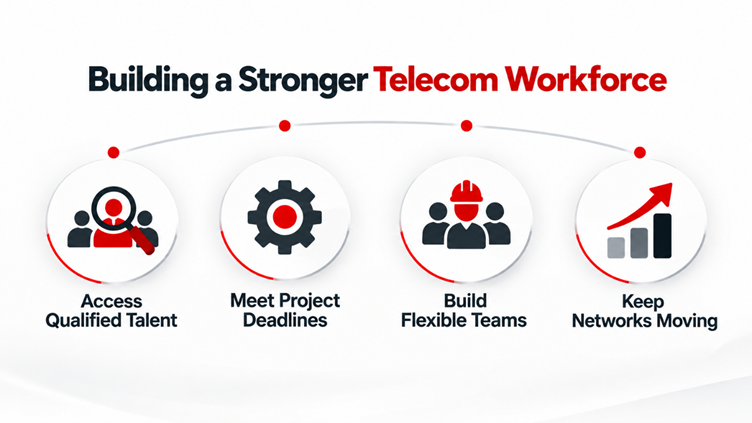
Telecommunication Staffing Agency recruiters live in this talent pool all day. They know which splicer just wrapped a contract two provinces or states over, and which tower hand has been quietly looking around. That kind of knowledge doesn’t come from posting an ad and hoping. They also handle the dull checking you’d rather not do yourself, like confirming climbing certifications, reading work histories, and asking the awkward questions about heights and travel before anyone shows up. Say your company needs eight people for a six week upgrade. A good partner can often line them up within days. Or maybe you’d like to try someone out before making a permanent offer. Fine, that’s allowed too. Payroll, insurance paperwork, and a good chunk of compliance usually land on their desk, not yours. And here’s a perk people overlook: candidates tell recruiters things they’d never tell an employer, like “the pay’s too low” or “that schedule is brutal.” Hearing it early can save you a lot of grief.
Jobs That Suit This Kind of Help
- A big build with a hard deadline. A fiber rollout can need dozens of trained hands for a few months, then none at all.
- Storm and outage repairs. Waiting weeks to hire while service is down costs more than any agency fee.
- Remote jobs. Local talent is often thin, so a partner who can recruit and move workers saves you a headache.
- Rare specialists. Radio engineers and network planners rarely respond to ordinary ads.
- Growth you can’t predict. Test the demand first, then decide whether permanent seats make sense.
Keeping Good Workers Once You Have Them
Finding talent is the easy half, honestly. Keeping it is where things get tricky. Technicians remember how they were treated. If the schedule changes every other day, if per diem arrives late, or if the site supervisor treats them like a number, word travels fast, and this is a small world. Smarter partners push on these details early. They’ll flag a pay gap, suggest a sensible travel rotation, and arrange short courses so newer workers can pick up missing pieces, like an added safety ticket or a new type of equipment. Some pair rookies with seasoned hands, which helps pass along knowledge that no manual captures. When it works, you’ll see familiar faces returning for the next project, and now and then a contractor asks about a permanent seat. That’s about the best compliment this business offers.
Choosing a Partner and Planning Ahead
Start with a simple question: have you done work like mine? Rural fiber is a different animal from small cell sites or office cabling, so ask for examples that match. Find out how they verify safety records, and how fast they can swap out someone who isn’t working. Ask who covers injury reporting and insurance, because field work isn’t gentle. Meet the actual recruiters, not just the person who sold you the contract, and if they’ll let you, phone a past customer. Be a little suspicious of anyone promising instant results for every role. The best technicians are scarce for everybody, and honest providers will tell you so. Share your deadlines, budget, and standards upfront, and plan a short review after the first project. This shortage isn’t ending soon. But companies that build good partnerships now will spend a lot less time scrambling next year.
Frequently Asked Questions
What makes telecom hiring harder than other fields?
The work involves heights, travel, and mixed skills, while many veterans are retiring and other industries compete for the same trades. Training newcomers takes time.
How quickly can a crew be assembled?
Often within days for common roles, since partners keep ready pools. Rare specialists take longer, so share your timeline early and keep your requirements realistic.
Who is responsible for safety on site?
Responsibility is often shared. The partner screens training and certifications, while your site team controls daily conditions, equipment, and supervision. Spell out duties in writing.
Is this only for large carriers?
Not at all. Smaller contractors and local internet providers use outside help too, especially for short projects where permanent staff would otherwise sit idle later.
What should I ask before signing?
Ask for similar past projects, safety screening steps, replacement speed, insurance coverage, and a client reference. Request a short pilot first to test the fit.