

Quick Question: what does a new hire really cost you? Most people say the salary and stop there. But the job ad, the recruiter’s time, the long interviews, the laptop, the training, and those first slow weeks all hide behind the pay check. And if the person quits in six months? You pay for all of it twice. That’s the bill nobody plans for, and it’s the reason many owners are now looking at flexible workers who come in for a set stretch and leave when the work does. This post looks at where the quiet costs hide, how paying only for the work you have changes the math, when the idea fits, what can go wrong, and how to pick a partner. You don’t need a finance background to follow along. Think of it as a friendly chat, not a lecture. In this blog, we will discuss practical ways to spend smarter on people.
Where the Money Quietly Leaks
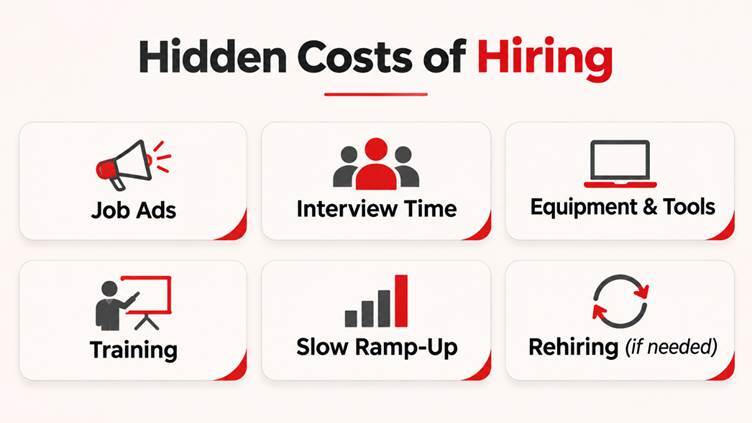
Think about the last role you filled. Sure, there was the ad, and maybe a recruiter’s cut. But what about the afternoons your manager burned reading resumes, or the three rounds of interviews that pulled busy people off their real jobs? Toss in background checks, a desk, a laptop, software licenses, and an onboarding plan, and the tab is already climbing before day one. Then there’s the slow start. A newcomer rarely runs at full speed for weeks, and coworkers lose time answering questions that were obvious to the last person. An empty seat costs something too, because the work either waits or lands on teammates who are already stretched. And when the match turns out wrong, you pay again, in lost momentum, awkward goodbyes, and a brand-new search. None of it shows up as one neat number, which is exactly why it keeps catching owners off guard.
Paying Only for the Work You Actually Have
So, what changes when you bring in someone for a set stretch instead of adding a permanent seat? Quite a lot. That’s where contingent staffing services providers come in, since they already keep a pool of screened candidates, which shrinks your search from weeks to days and keeps your managers out of the resume pile. Payroll, onboarding forms, and plenty of routine checks stay on the provider’s side. You pay for the hours or the project, and when it ends, it ends, with no severance talks or awkward timing. There’s a quieter benefit too. You get to see how someone really works before making a bigger promise, which beats any interview. Plenty of employers have found a future full-time teammate this way, and they chose with far more confidence. Nothing magical is going on. You’re paying for effort while there’s effort to buy and skipping the cost of carrying idle capacity.
When the Idea Makes the Most Sense
- Seasonal rushes: shops, warehouses, and tax offices often need extra hands for a few weeks, then none.
- Projects with an end date: a system upgrade or product launch rarely justifies a permanent seat.
- Leave coverage: when a key person is away for months, a stand-in keeps things moving.
- Rare skills needed briefly: a specialist for a short audit cost far less than a full salary.
- New ground: opening a second office is easier when headcount isn’t locked in.
- Budgets that hate surprises: a set project fee is simpler to plan around than open-ended payroll.
What Can Go Wrong
I’d be doing you a disservice if I only sang the praises. The biggest trap is classification. If someone is treated like a regular employee, with fixed hours, close supervision, and a long stay, but labelled as short term, you could face back pay, tax trouble, or fines, and the rules differ from place to place. Another snag is knowledge. When a temporary worker leaves, what they learned often walks out too, so write things down as you go. Culture can wobble as well. People who rotate in and out may feel like outsiders unless somebody bothers to include them at lunch. Read the fine print, too. Some agreements carry minimum terms, markups that aren’t obvious, or fees if you later offer a permanent job. And don’t lean on flexible help for everything, because a core team that knows your business deeply still matters. A short chat with an employment lawyer before you start is cheap insurance.
Picking a Partner Wisely
Begin with plain talk about money. Ask how the provider prices its work, what’s included, and what extras might appear later. Find out how they screen candidates, how fast they can replace someone who isn’t working out, and how they keep their own pay and paperwork practices clean. Ask for references from clients with needs like yours, and call them. Meet the person who’d handle your account day to day, since the salesperson won’t be around on a busy Tuesday. Try a small project before committing to anything big, and agree upfront on how you’ll judge success, whether that’s time saved, quality, or fewer surprise expenses. Then check in every few months. The point isn’t to replace your core team. It’s to stop paying for idle capacity and slow searches, and to put that money where it helps your business grow.
Frequently Asked Questions
1. What costs usually get missed when hiring?
Job ads, interview hours, equipment, training, slow first weeks, and replacing a poor match often go uncounted, yet together they add up to real money.
2. Is this only for short projects?
No. It also covers ongoing flexible needs, such as busy seasons or leave cover, though longer arrangements deserve clear, carefully written contracts from day one.
3. Can temporary workers become permanent?
Often yes. Many providers allow conversion, but fees and timing vary, so read that clause in the agreement carefully before anyone ever starts working onsite.
4. Who handles payroll and paperwork?
Usually the provider handles payroll, taxes, and onboarding forms for its workers. Even so, confirm every responsibility in writing so nothing falls through the cracks.
5. What is the biggest risk?
Misclassifying workers is the top legal risk, since rules differ by region. Talk to an employment lawyer before you start, and keep clear written records.