

A few years ago, contingent hiring was often treated like an emergency lever. A team missed a deadline, a project suddenly expanded, or a full-time role stayed open too long, and someone called a staffing partner to fill the gap quickly.
That model still exists. But for enterprise HR leaders, it is no longer enough.
Today’s workforce is more fluid, global, specialized, and project-driven. Companies need cybersecurity experts for six months, cloud engineers for a migration, clinical talent for a new location, or customer support teams that can scale before peak season. The question is not whether contingent talent belongs in the workforce strategy. It already does.
The real question is whether the organization is managing that workforce with visibility, discipline, and purpose.
Why Contingent Workforce Management Has Become a Boardroom Issue
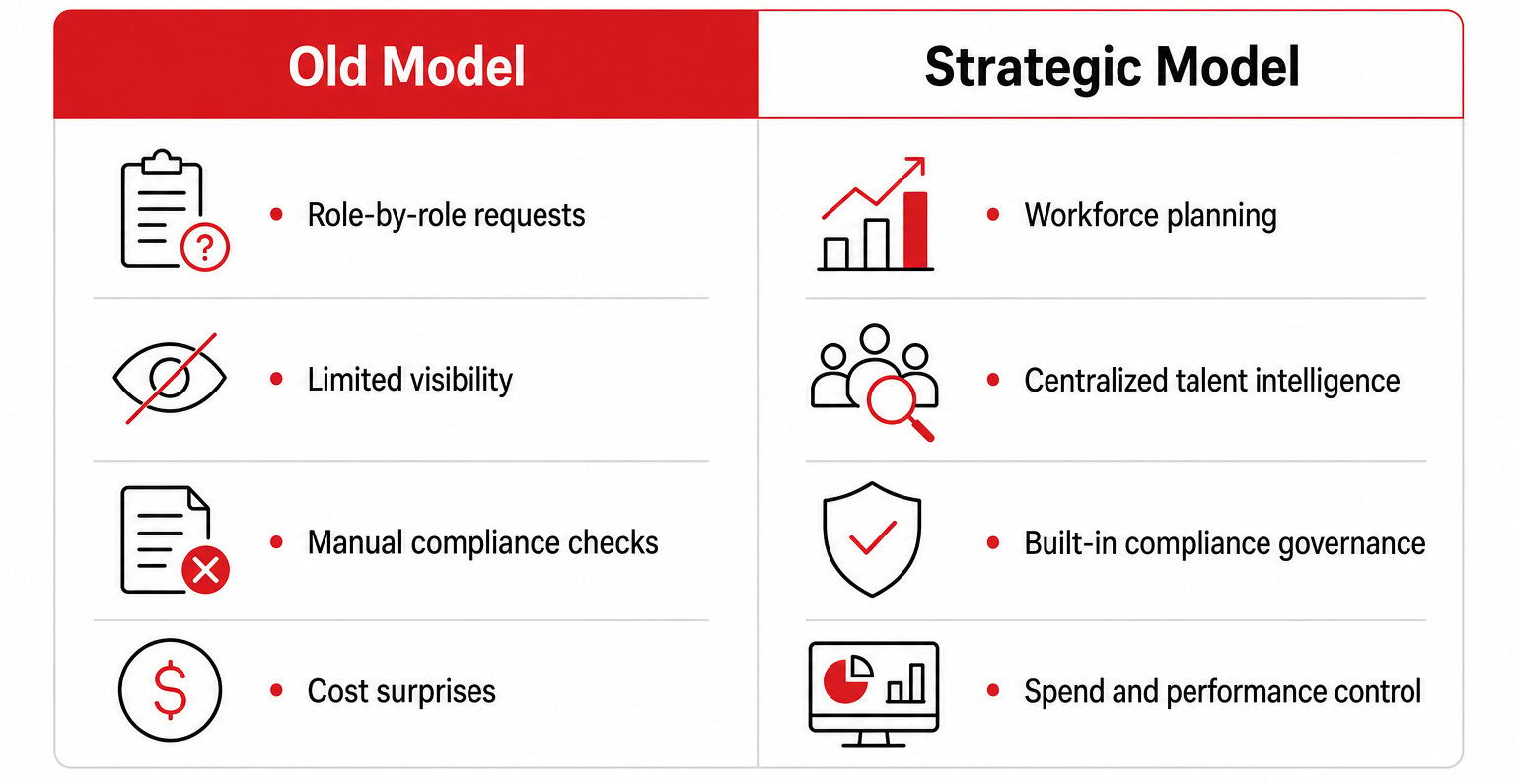 Contingent workforce management is the structured approach to sourcing, engaging, governing, and measuring non-permanent talent. That includes contract workers, consultants, temporary staff, project-based professionals, and specialized external talent.
For HR and procurement leaders, the pressure is coming from several directions at once:
-
Hiring teams need faster access to qualified talent.
-
Finance wants tighter control over labor spend.
-
Legal and compliance teams want fewer classification risks.
-
Business leaders want flexibility without sacrificing quality.
-
Employees and contractors expect a smoother, more professional experience.
When these priorities are handled separately, the contingent workforce becomes fragmented. Different departments use different vendors. Rates vary widely. Compliance checks happen late. Hiring managers rely on personal networks instead of validated talent pipelines. Nobody has a complete view of who is working, where they are working, what they cost, or how they perform.
That lack of visibility is where risk starts.
The Shift From Reactive Hiring to Workforce Planning
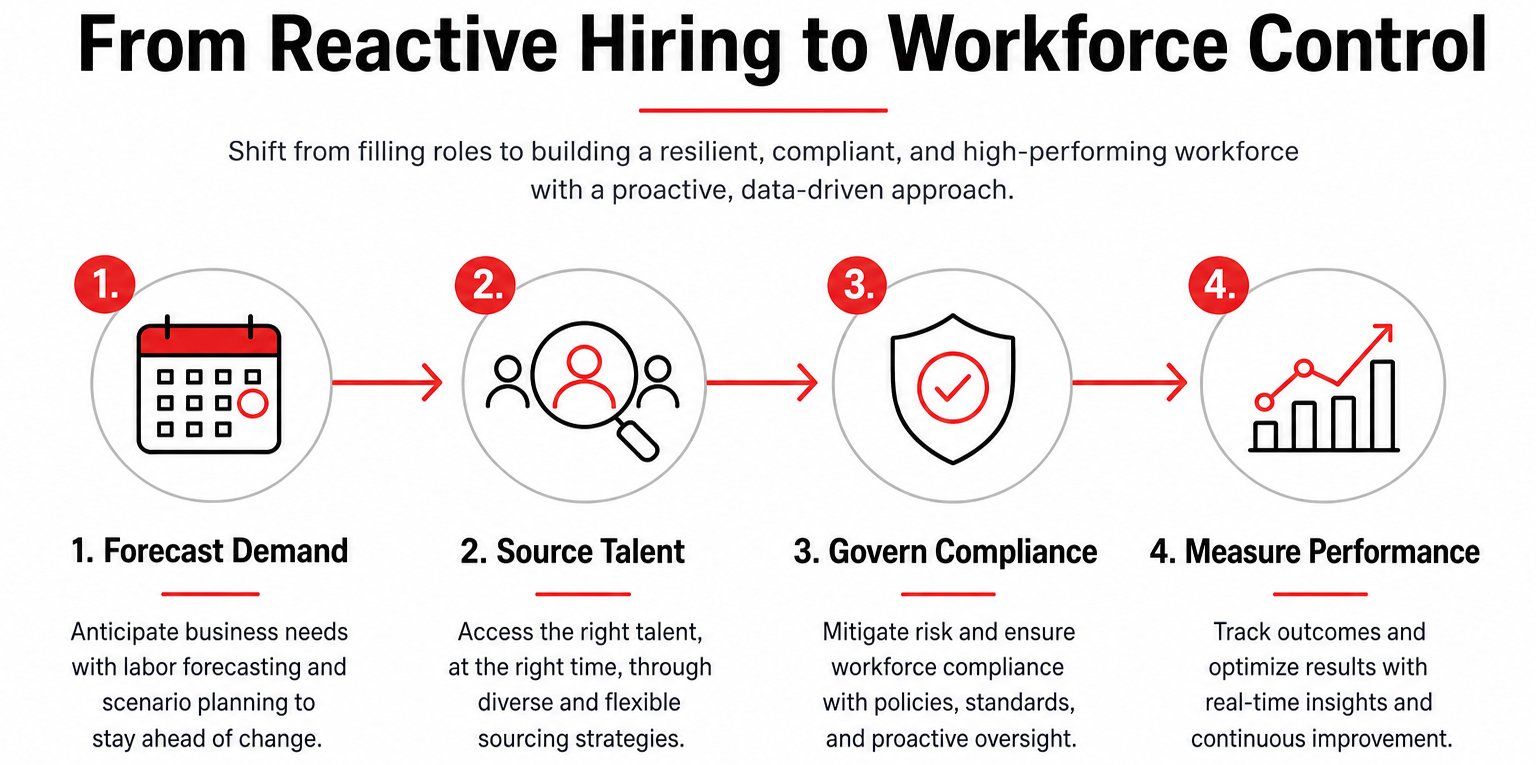
The strongest contingent workforce programs do not begin with a job requisition. They begin with demand planning.
Instead of asking, “Who can fill this role by Friday?” mature organizations ask better questions:
-
Which projects will require flexible talent over the next two quarters?
-
Which skill sets are difficult to hire full time?
-
Which roles are better suited for contract, consulting, or statement-of-work models?
-
Where are we overspending because of urgent hiring?
-
Which suppliers consistently deliver quality talent?
This shift changes the conversation. Contingent hiring becomes part of workforce architecture, not just a backup plan.
For example, an IT leader planning a cloud modernization project may not need to hire permanent specialists for every phase. Some skills may be required only during assessment, migration, testing, or security hardening. A well-run contingent workforce strategy allows the organization to bring in the right expertise at the right moment, then adjust as the project evolves.
That is agility with control.
What a Strong Contingent Workforce Program Needs
A practical contingent workforce management strategy usually rests on five pillars.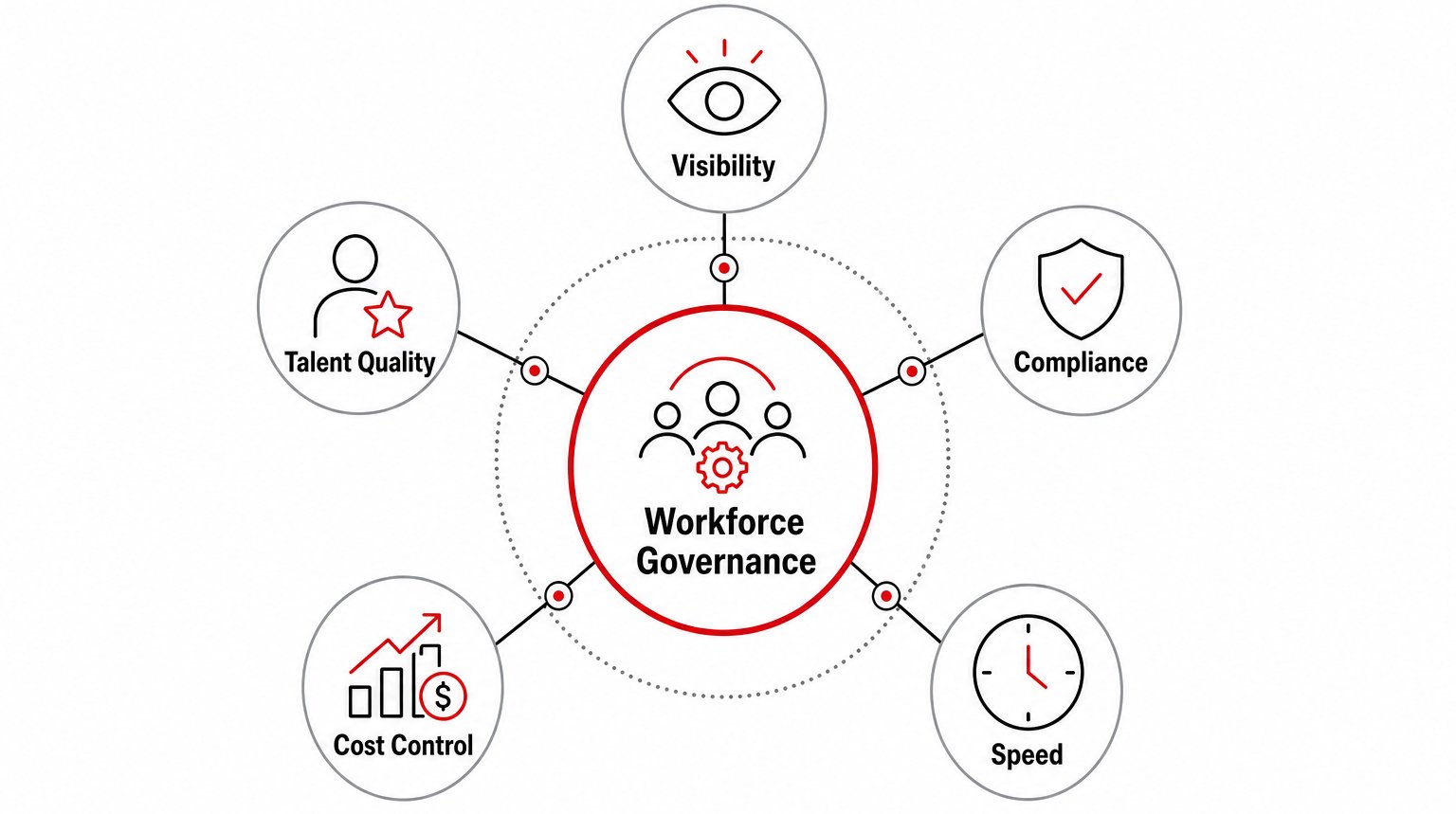
First, visibility. HR leaders need a clear view of all contingent workers across departments, locations, suppliers, costs, and assignment timelines. Without that, decision-making becomes guesswork.
Second, compliance. Worker classification, contracts, background checks, onboarding, data access, and local labor rules must be managed consistently. This becomes especially important for companies hiring across regions or using global talent.
Third, speed. A good program should reduce time-to-fill without lowering standards. Speed should come from prepared pipelines, supplier accountability, and clear intake processes, not shortcuts.
Fourth, cost control. Contingent labor can become expensive when every request is handled as urgent. Rate cards, supplier comparisons, approval workflows, and performance data help prevent avoidable spend.
Fifth, talent quality. Filling the seat is not the same as solving the business problem. The right partner should measure fit, performance, retention, and time-to-productivity.
When these pillars work together, contingent hiring becomes more predictable. Managers get talent faster. HR gets governance. Finance gets clarity. Workers get a better experience.
The Role of a Workforce Solutions Partner
Many enterprises reach a point where internal teams cannot manage the complexity alone. That is where the right workforce solutions partner can create real value.A strong partner does more than send resumes. They help build the operating model behind contingent workforce success. That may include market intelligence, supplier coordination, compliance support, global hiring guidance, IT staffing expertise, onboarding workflows, and performance reporting.
For HR leaders, the biggest advantage is not just access to talent. It is the ability to connect talent strategy with business execution.
If a company is expanding into new markets, the partner should understand local hiring conditions. If the business needs specialized technology talent, the partner should know how to assess niche skills. If procurement is trying to control spend, the partner should provide data that supports smarter decisions.
The best partnerships feel less transactional and more advisory.
Common Mistakes HR Leaders Should Avoid

Even experienced organizations can struggle with contingent workforce programs. The most common mistakes are usually preventable.
One mistake is treating all contingent workers the same. A temporary admin role, an SAP consultant, a healthcare contractor, and a project-based engineering team may all sit outside permanent headcount, but they require different sourcing, compliance, and management models.
Another mistake is focusing only on cost. Lower rates can look attractive on a spreadsheet, but poor fit, slow delivery, rework, and turnover often cost more in the long run.
A third mistake is waiting too long to involve compliance and procurement. When governance enters after talent is already selected, teams rush through checks and expose the business to avoidable risk.
Finally, many companies fail to measure outcomes. If leaders only track how many roles were filled, they miss the bigger story. Time-to-productivity, assignment completion, manager satisfaction, compliance health, and supplier performance all matter.
What HR Leaders Should Do Next
Contingent workforce management is no longer a side process. It is a core part of how modern companies stay competitive, especially when skill needs change faster than traditional hiring cycles can support.
The next step is not to overhaul everything at once. Start by getting visibility. Identify where contingent talent is being used, which suppliers are involved, what the spend looks like, and where risks or delays appear most often.
From there, build a more intentional model. Define when to use contingent talent, how requests should be approved, which partners should support different skill areas, and which metrics will guide decisions.
The organizations that win will not be the ones that simply hire faster. They will be the ones that build a flexible workforce without losing control of quality, cost, compliance, or strategy.
For enterprise HR leaders, that is the real promise of contingent workforce management: the ability to scale talent with confidence.
.png)